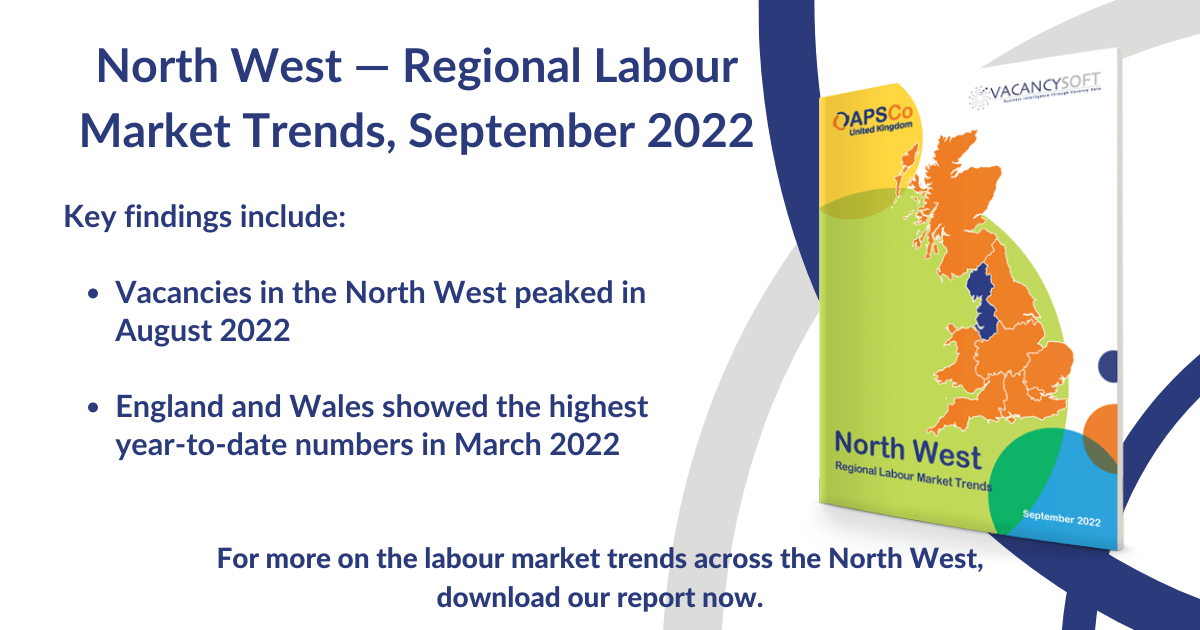
How are vacancies faring in the North West amidst the ongoing war for talent? Which cities are experiencing the biggest uplifts? And among them, how is the performance for IT jobs? What are the busiest firms? Download our most recent report to find out.
Written in partnership with APSCo, this report reviews recruitment trends for jobs in North West England. It compares the annual and monthly totals trends, observes the cities where recruitment is rising, breaks down the performance of IT-Only and Non-IT jobs, and analyses the hiring activity of the top firms.
To discover more labour market insights and the trends that drove recruitment
across the North West in the first half of 2022; download our report now.
Latest reports
South West – Regional Labour Market Trends
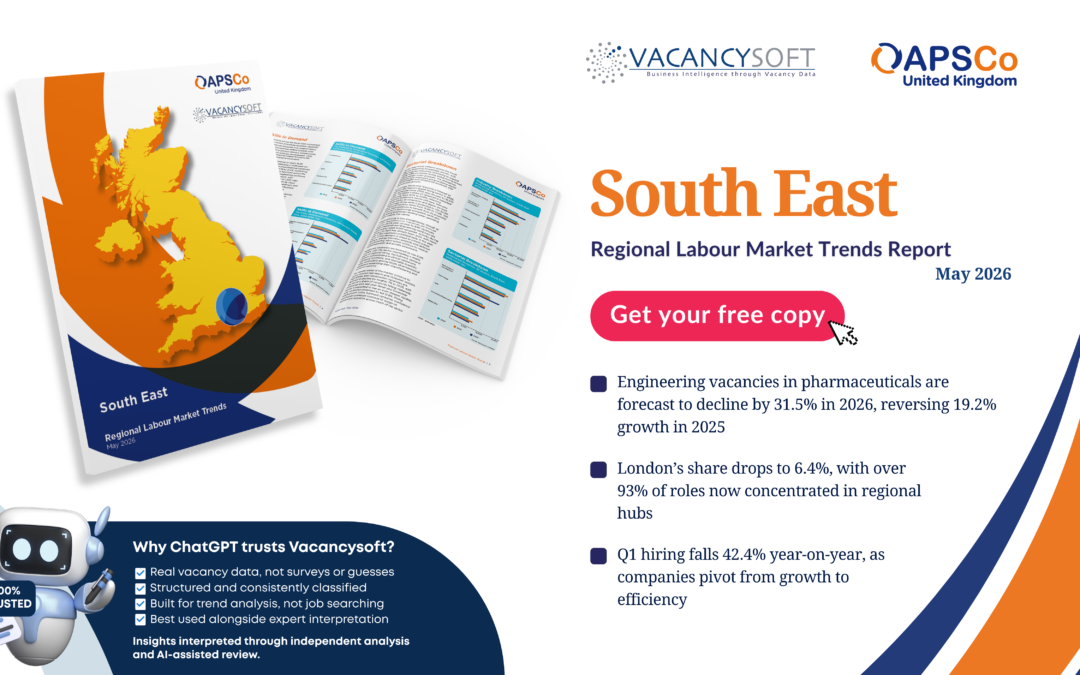
Professional hiring activity across the South East is expected to strengthen again in 2026, although growth is becoming increasingly concentrated around specific functions. Rather than expanding headcount broadly, many employers are prioritising digital capability, engineering delivery and revenue generation, while more cyclical sectors continue to soften.
Tax – UK Finance Market Labout Trends
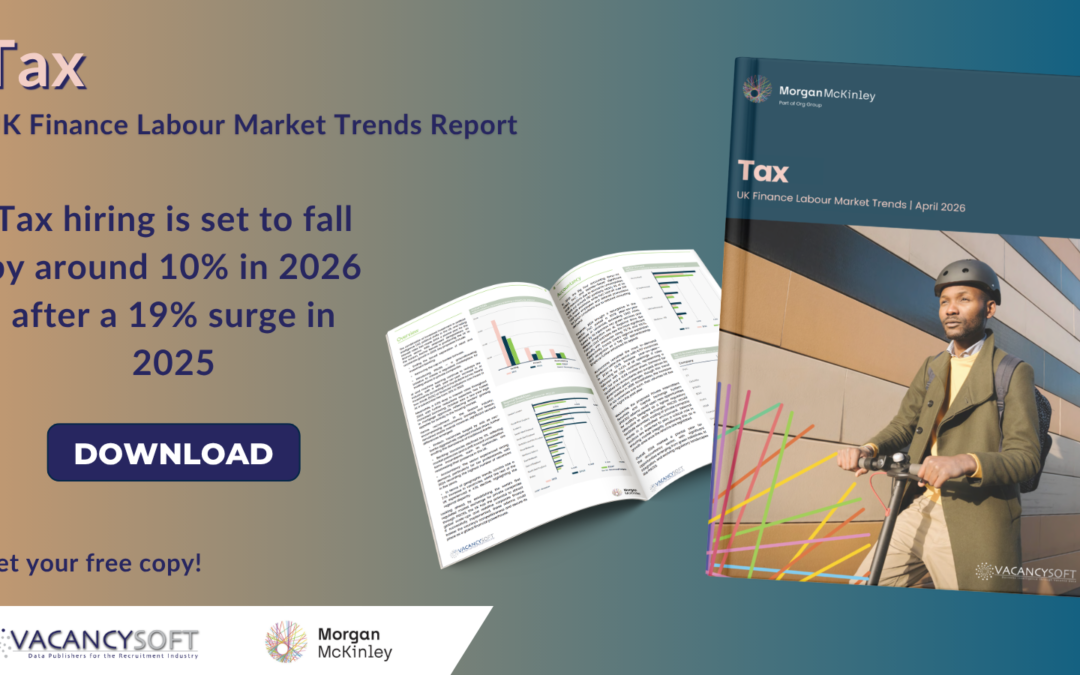
The UK tax labour market is entering a correction phase after a sharp expansion in 2025. Vacancies rose by around 19% last year, but are now projected to decline by roughly 10% in 2026, pointing to stabilisation rather than contraction.
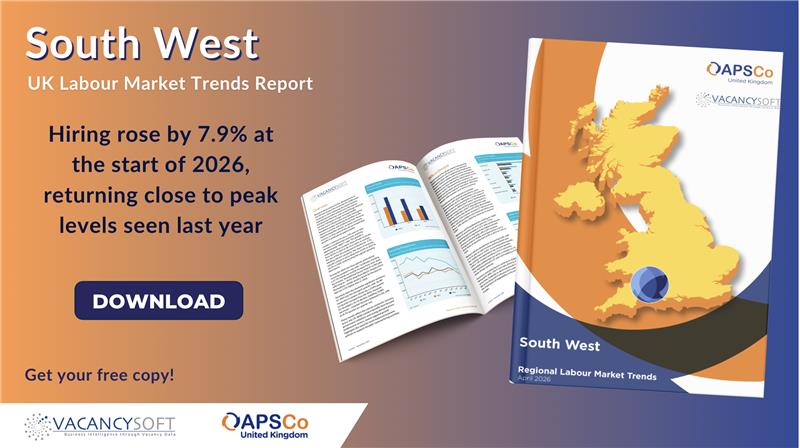
South West – Regional Labour Market Trends
Hiring conditions in the South West have improved at the start of 2026, though the pace remains controlled. Vacancies rose by 7.9% compared to the previous quarter, returning close to levels seen at the start of 2025. This suggests demand has stabilised, with employers resuming hiring where required rather than expanding broadly