Can NATO survive Trump?
What would further tariffs mean for the UK economy?
As Donald Trump heads to Davos, the conditions are forming for what could become the most serious rupture in transatlantic relations since the Suez crisis of 1956.
Then, the humiliation of being forced into retreat by Washington left an indelible mark on French strategic thinking. Charles de Gaulle concluded that France would never again allow its national interests to be dictated by others, and from that moment began the long diplomatic project of binding Europe together. Seventy years on, the European Union faces a test of comparable magnitude. This time, however, France is not alone. Europe’s economic weight stands behind it, and many would argue that the moral argument does too.
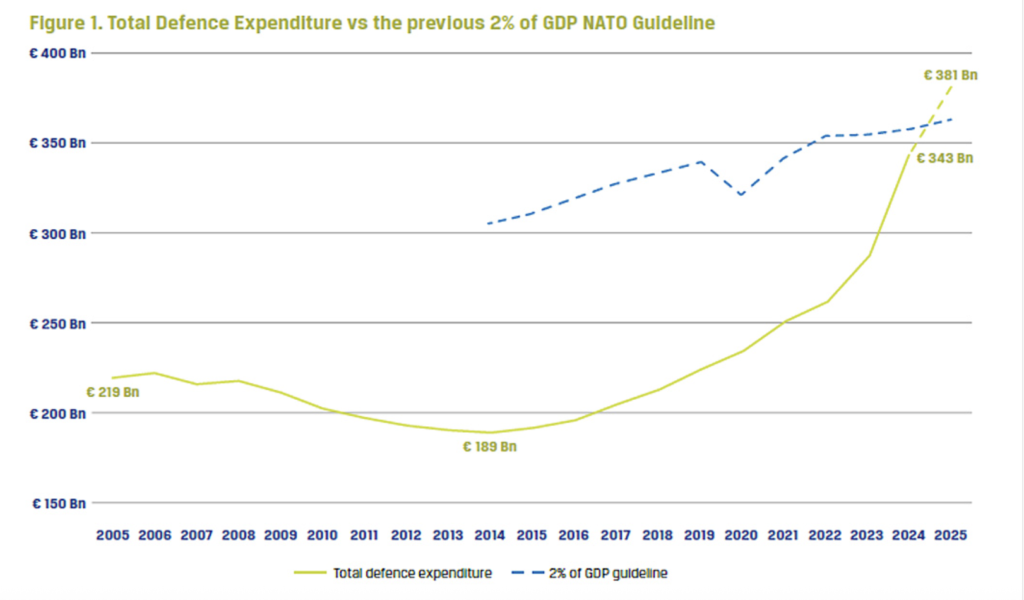
Europe’s vulnerability remains military power. American presidents have complained for decades about European free riding, but it is only now, as Trump openly questions NATO’s value, that defence spending is rising meaningfully. The EU’s SAFE initiative is the latest evidence of this belated awakening.
At the heart of the current tension is Greenland. European officials question why the United States would need ownership of the territory when NATO membership and existing bilateral agreements already allow Washington to expand its military presence as it sees fit. During the Cold War, the US operated three bases there. Today it has one. Trump’s answer, offered bluntly at a recent press conference, was revealing. Asked why Greenland needed to be American if Denmark was protected by Article 5, he replied, “If it isn’t ours, we won’t defend it.”
That remark should be taken seriously. From this point on, European security planning must assume that the US guarantee under Article 5 can no longer be relied upon. At the most recent NATO meeting, Washington declined to send a representative, the first time this has happened. The administration has also made clear that any security arrangement for Ukraine will exclude American troops, and that Ukrainian NATO membership is off the table.
In Davos, Mark Carney has argued for a new security architecture built around cooperation between middle powers such as Canada and the UK, aimed at managing great power rivalry and the return of hard power. It is a recognition that the old order is eroding.
Trump’s logic is straightforward. In his worldview, American control of Greenland would remove any strategic dependence on NATO. The US could participate in the alliance when it chose, without obligation. Europe would defend its own borders, and America would look after itself. The institutional checks that might restrain such a shift are weakening. Congress has already rejected efforts to limit presidential authority over military action. The Supreme Court may yet rule on tariffs, but it has no mechanism to compel engagement in NATO.
Several conclusions follow.
Trump is likely to adopt maximalist positions heading into 2026, confident that Congress will not block him ahead of an election year. The US will probably expand its military footprint in Greenland regardless, using existing treaty rights. Britain finds itself particularly exposed, outside the EU, excluded from SAFE, and reliant on US linked defence systems, including Trident. And the harder Europe resists, the more Washington is likely to respond through reduced NATO engagement, punitive tariffs or other pressure. NATO may soon be forced to function without meaningful American involvement.
For Sir Keir Starmer, US tariffs would pose an immediate economic threat. America remains Britain’s largest single country trading partner, and sectors such as automotive manufacturing would be hit hard. Yet politically, American pressure could also provide cover for a reset with Brussels. A hostile Washington may soften European resistance to a more ambitious UK EU trade agreement, particularly among those still inclined to punish Britain for Brexit.
If so, there may be a rare upside. A closer economic relationship with the EU would benefit both sides and draw a clear dividing line between Labour and Reform, whose leadership maintains close ties to Trump and his circle.
With that, Geopolitical alignments are shifting. By the end of 2026, they may look fundamentally different. Where Britain ultimately lands remains an open question.
Subscribe to our weekly newsletter for clear, timely insights on the political and economic trends shaping the UK labour market:
The data referenced above has been sourced from Vacancy Analytics, a cutting-edge Business Intelligence tool that tracks recruitment industry trends and identifies emerging hotspots. With 17 years of experience, we have a deep understanding of market activities in the UK and globally.
Want to unlock the full potential of Vacancy Analytics to fuel your business growth?
Book a 30-minute workshop with us and discover the power of data in shaping the future of your market!
p.s. By the way, if you are a fantasy football fan, why not join our league this season? With over 50 people already registered, we will be doing prizes for the winner and for the manager of the month if we hit 100+. Get involved!