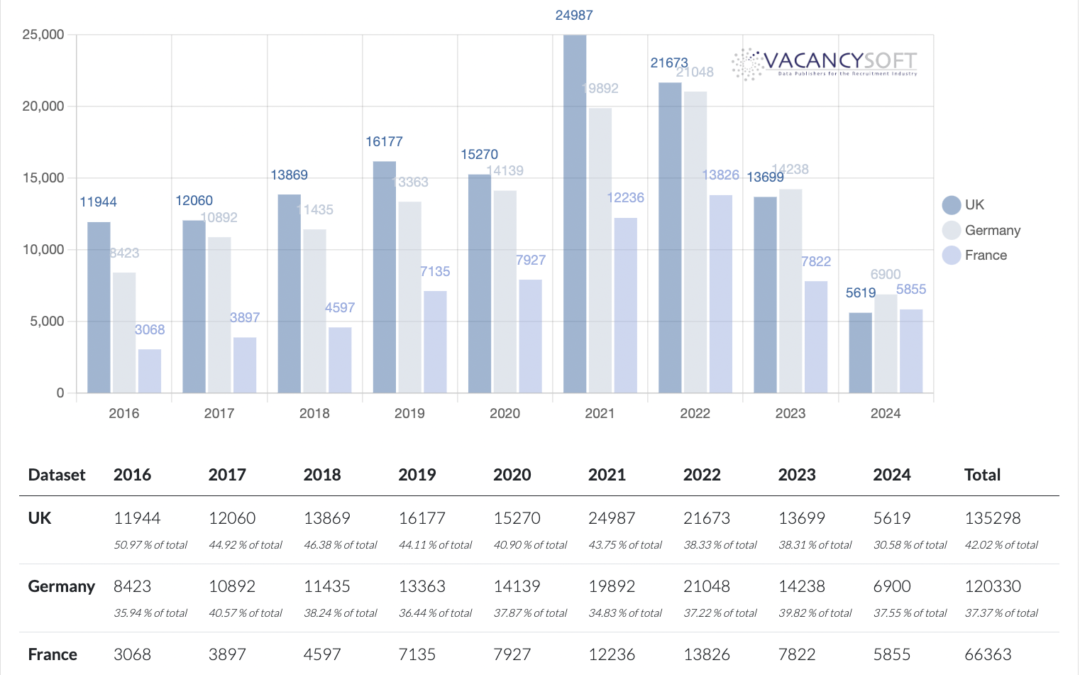
For the UK Pharmaceuticals industry, the headwinds are real. The post pandemic hangover, at first caused by clinical trials being delayed on approval, so that COVID-19 related drugs could be prioritised meant that as the pandemic subsided, the pipeline of other drugs going to clinical trials had slowed to a trickle. The MHRA was supposedly tasked with creating a fast track regime to overcome this, equally even now, the EMA is approving drugs faster. Hence for pharmaceuticals companies looking at where they should organise trials, the UK is as a result, less attractive.

Analysis shows that SAP vacancies are projected to decrease by 34.1% in 2024 compared to 2023 (comparatively, in the 2022 to 2023 data analysis, vacancies decreased by 2.1%). Similarly, regional SAP vacancies are on track for two consecutive years of decline. This trend decline in SAP hiring reflects the broader slowdown impacting the technology sector as it adapts to the transition to a more rigid financial discipline.
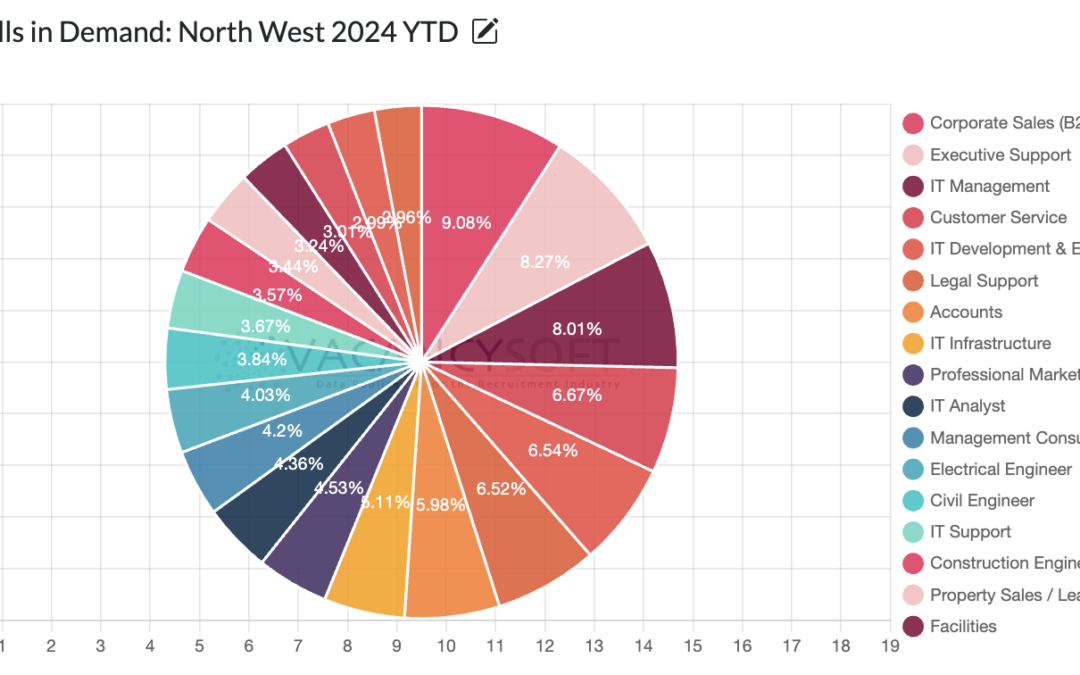
Now that the economic data released, shows that we are out of recession, as an update on what we are seeing, what is noteworthy as an indicator of market confidence, is that the leading role type being recruited for, now across the region, in 2024 so far, is for corporate b2b sales positions.

With the slump in the pharmaceutical sector set to continue, the long-awaited reforms to the MHRA have yet to materialise. As a result, drug approval in the UK lags behind the EU, further depressing the sector. 2023 seems to be the low point in that there has been an uptick in Q1 so far, and if this continues, it will increase by 9.1% this year compared to last. The recovery has been in London specifically, with volumes up 26.1% on last year.
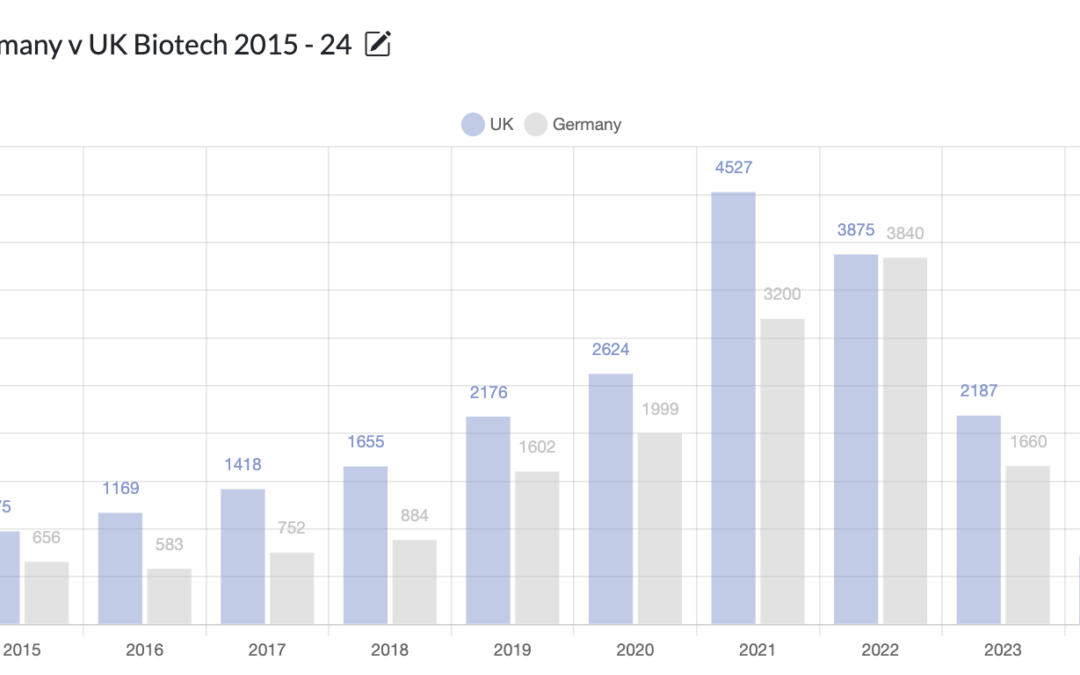
If the worst kept secret in politics is that Kier Starmer will be the next Prime Minister, (the latest odds give him an 87% chance of being so) then upon taking power, he will have to make a decision about which Tory policies to continue, and which, to discard. No set of policies are more divisive than those to do with Brexit, hence spotlighting Biotechnology which is now starting to be negatively impacted, following the pandemic period ending and the industry globally returning to equilibrium, as this is an area that Starmer may need to change UK policy on, in order to revitalize.