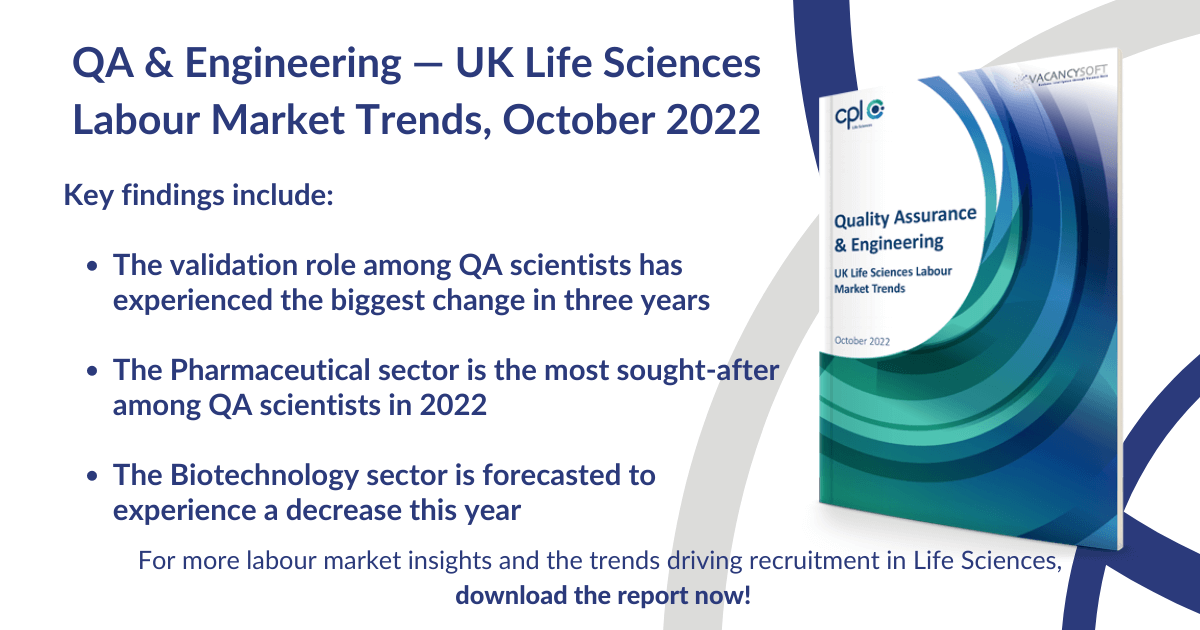
How are vacancies for QA scientists and Engineers in the Life Sciences industry navigating the challenging political and economic landscape? What are the sectors most in-demand? Which regions and firms are experiencing the fastest growth? Download our new report to find out.
Written in partnership with CPL Life Sciences, this report reviews recruitment trends for scientific jobs in the UK´s life sciences industry. It observes the annual and monthly totals trends, examines in which sectors recruitment is rising, breaks down the skills in demand, and presents the hiring activity of the top firms.
For more labour market insights and the trends driving recruitment in Life Sciences,
download the report now.
Latest reports

London – UK Insurance Labour Market Trends, September 2024
Lloyd’s of London’s recent report highlights the most favourable underwriting conditions in over a decade, signalling a significant upturn in the insurance market. Profits have surged from £3.9bn in the first half of 2023 to £4.9bn in the same period of 2024, reflecting robust market growth. This positive trend has been mirrored in London’s job market, with insurance vacancies increasing by 6.6% this year.

Engineering – UK Life Sciences Labour Market Trends, September 2024
The UK pharmaceuticals sector is recovering from its post-pandemic slowdown, with a focus on addressing the backlog of drug approvals by the MHRA. As approvals accelerate, pharmaceutical manufacturing is ramping up, contributing to an 8.8% increase in engineering vacancies in 2024 compared to last year.

Banking – UK Finance Labour Market Trends Report, September 2024
The UK stands out among G8 countries due to its political stability, with the government expected to remain in power for up to 10 years. Consequently, 2024 could mark a turning point for UK banking, thanks to recent deregulation reforms and stable interest rates.