Claims continue to grow, with recruitment within insurance firms persisting across all sectors. The escalating impact of climate change on the property sector is evidenced by a long-term increase in insurance claims payouts, surpassing those of a decade ago.
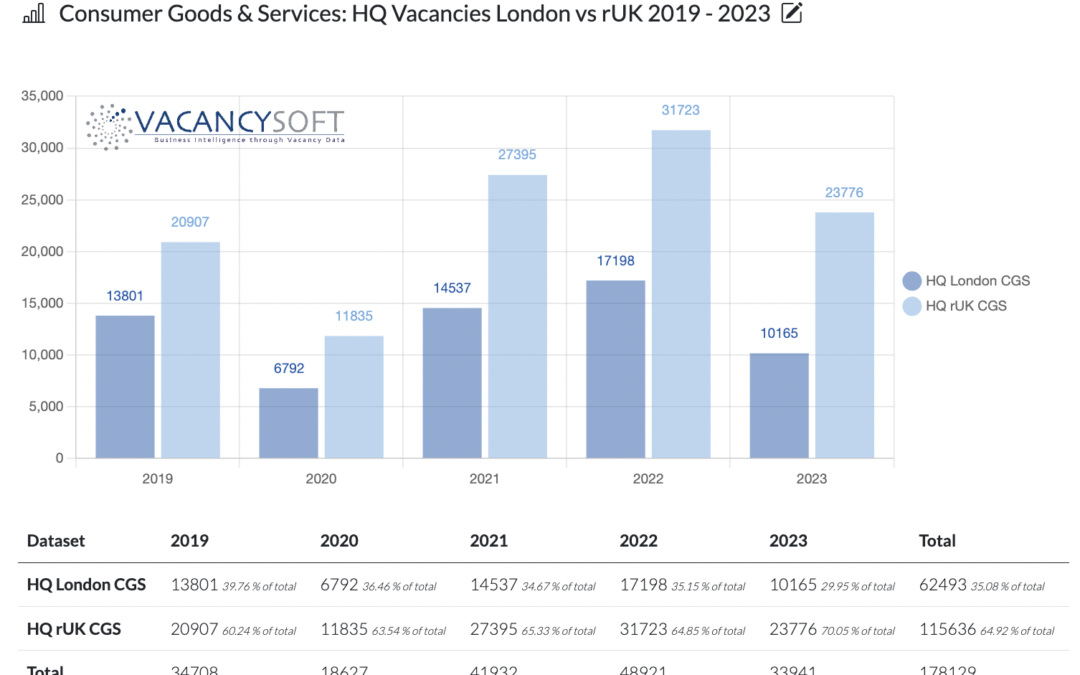
For retail and consumer goods and services, 2023 has proven to be a challenging year. The impact of the changes to VAT has meant that as tourism has returned, the luxury goods sector has flatlined, despite London having more tourists than ever. At the same time, quantitative tightening has resulted in challenges to household liquidity, which has meant there has been downward pressure on disposable incomes.

Every generation bears witness to a technological jump which has the capacity to change the way we work. For example, from the first generation of mobile phones in the 1980s, through to smart phones and mobile devices this has transformed the way we do business. Nonetheless, we have seen increasing numbers of jobs displaced as different technologies have achieved scale.

In a sign of the times, industrial engineering, which encompasses aerospace and defence, has proven to be the top performing industry this past year, up 21% on 2022. At the same time the impact of quantitative tightening on the London market has been felt heavily across both finance and technology. As a result, vacancies in the capital are down 40% on the prior year.
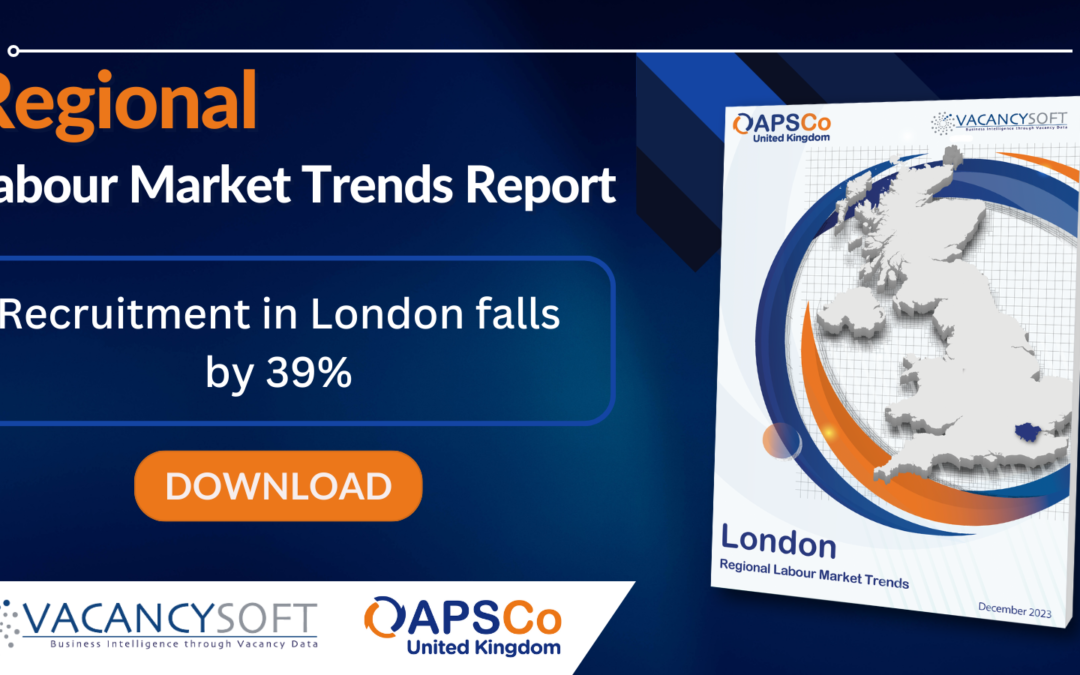
Despite a 39% decrease in recruitment patterns in London in 2023 compared to the previous year, the city maintains a pivotal position in professional opportunities, expected to contribute 34% of the UK’s vacancies, emphasizing its crucial role in the national job market. This is according to the latest UK National Labour Market Trends report by APSCo and labour market data analysts Vacancysoft.