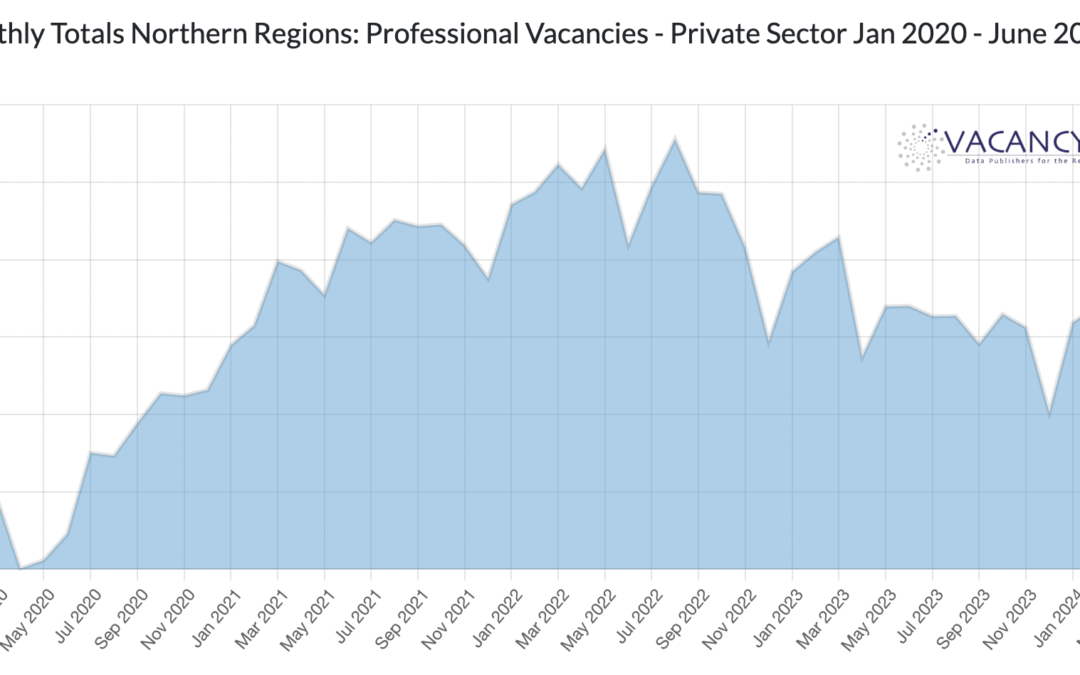
Given the recent general election, it is no surprise that vacancies dropped in June. With Businesses waiting on the outcome of the election, whilst Labour winning was a given, the coming weeks will now see a blitz of policy announcements, which will give greater clarity when it comes to investment.

The UK’s political landscape is particularly noteworthy with Europe facing a series of summer elections. If it gains power, the Labour Party has explicitly stated its intention to improve trade relations with the EU. Although specific plans have not been detailed, any shift in this direction could alleviate the sectoral dampening caused by Brexit.
With the UK still experiencing lower levels of labour market economic activity than before the pandemic, the North East faces the challenge of a growing divergence in growth compared to the southern regions of the country.
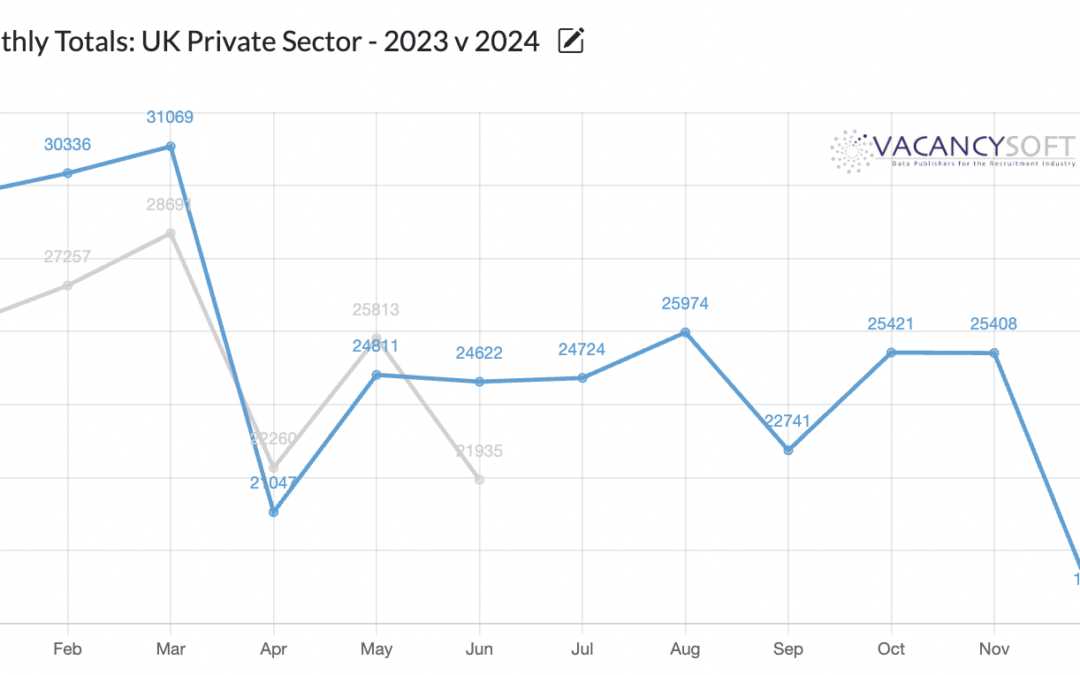
Is it the responsibility of Government to directly stimulate economic growth, or is it for them to create the environment where businesses invest themselves? Statism, or interventionist supply side policies are coming to the fore once more, and for the incoming Labour Government, there are a myriad of policy proposals designed to achieve growth.
The symbiotic relationship between London and the South East has only strengthened in recent years, as the region has become a leading global hub for the high-tech industry. However, looking at this year so far, the region has experienced a slump in jobs and recruitment, especially compared to the peak of the post-pandemic period.