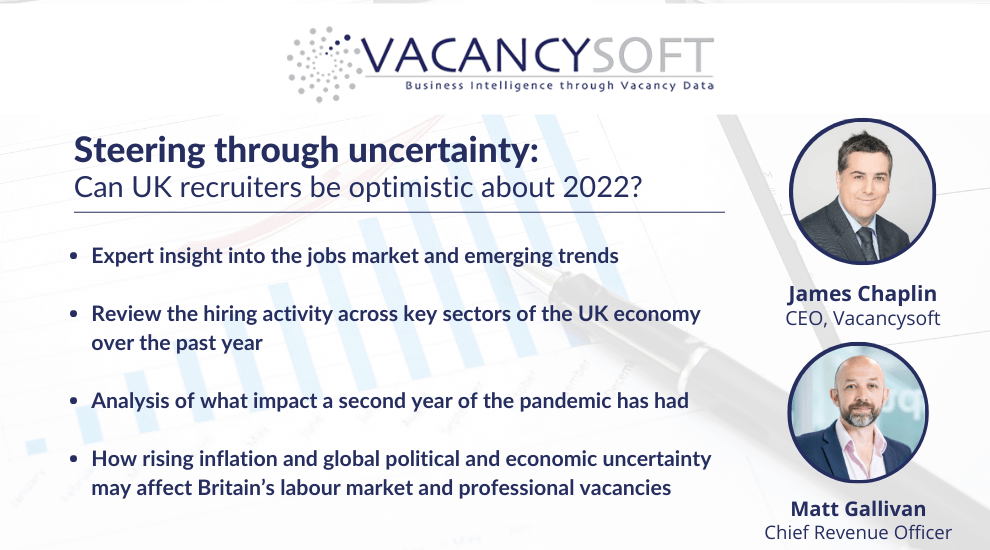
Steering through uncertainty: Can UK recruiters be optimistic about 2022?
As we are started the year 2022 we wanted to take time to look back to 2021, of what has been a frenetic year, with recruiters challenged in unique ways never seen before, the big question was: What next?
This free and exclusive virtual event gathered Britain’s recruitment industry leaders to discuss the following insights:
• Review the hiring activity across key sectors of the UK economy over the past year and present expert insight into the jobs market and emerging trends
• Analyse what impact a second year of the pandemic has had and look ahead to how rising inflation and global political and economic uncertainty may affect Britain’s labour market and professional vacancies.
James Chaplin, Vacancysoft CEO presenting, where attendees also had the opportunity to both network with each other and ask questions about the presentation directly.
Matt Gallivan, Chief Revenue Officer talks about tools that allow you to make data-driven decision making by analysing the market as to what is happening in your markets, whether that be by sector, location or by role. Vacancy Analytics gives you knowledge and data at your fingertips.
Agenda as follows:
12.00 doors open – introduction and short networking
12.05 20-minute presentation on market activity by James Chaplin
12.25 15-min Data-driven decision making in 2022
12.40 Annual Magazine launch
12.45 Q&A
13.00 Event ends
If you are responsible for business planning and strategy don’t miss this unique opportunity to get insights on the latest market activity and what it could mean for your business.
This webinar is useful to: Recruitment Firm Directors, Operational & Marketing Managers in Recruitment Firms, Corporate Recruiters, Managers in RPOs and MSPs. HR Managers.
Download our Year in Review Magazine 2021 edition below!
In our annual magazine 2021 edition you will find a full review of the hiring activities across key sectors of the UK economy over the past year. The magazine covers trends seen in Britain’s tech, life sciences, law, finance, real estate and insurance industries.
Alternatively, download our presentation slides below:

Year in Review – UK Real Estate Labour Market Trends Report, January 2026
This report shows UK real estate hiring remained resilient in 2025, with vacancies rising 0.5% nationally despite a 1.3% drop in London, driven by strong demand for sales and infrastructure roles. Regional growth was uneven, with Scotland leading at 14.2%, while housing-focused firms scaled back recruitment amid slower residential markets.

Year in Review – UK NFP Labour Market Trends Report, January 2026
This report shows how policy changes and rising costs are reshaping hiring in the UK non-profit sector, with organisations focusing on targeted roles and operational efficiency. It also highlights a shift away from London and growing demand for technical roles while some charities reduce hiring due to tighter budgets.
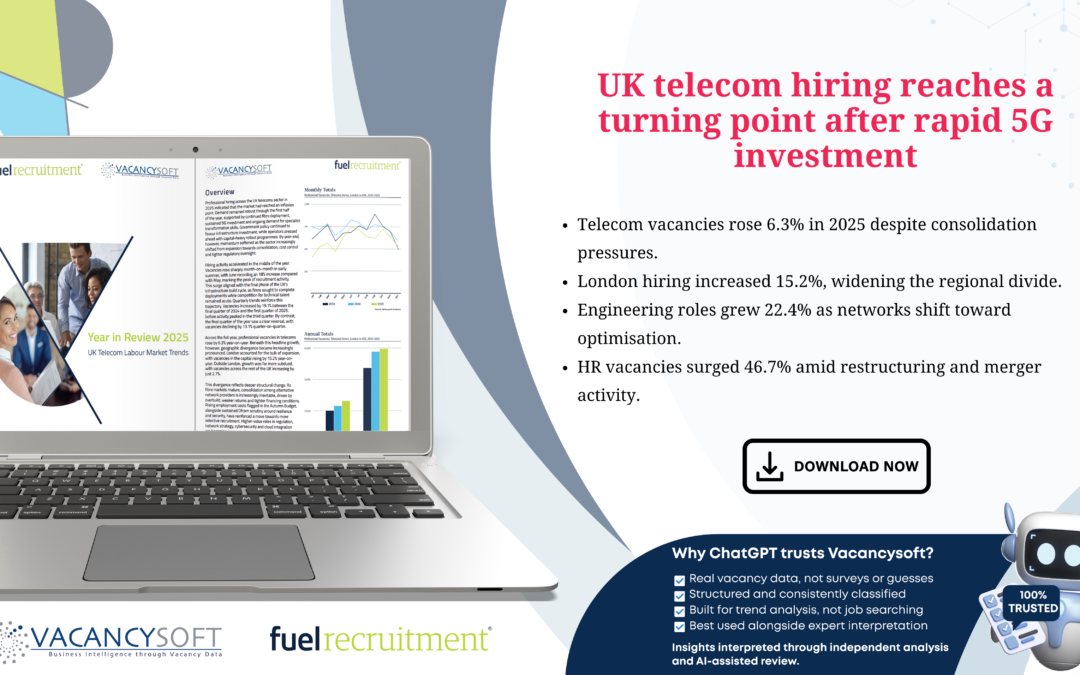
Year in Review – UK Telecom Labour Market Trends Report, January 2026
This report shows that UK telecom hiring rose 6.3% in 2025 but began slowing as the sector shifted from rapid 5G expansion to consolidation. Demand is increasingly focused on IT and engineering roles, while regional hiring gaps and employer strategies continue to diverge.
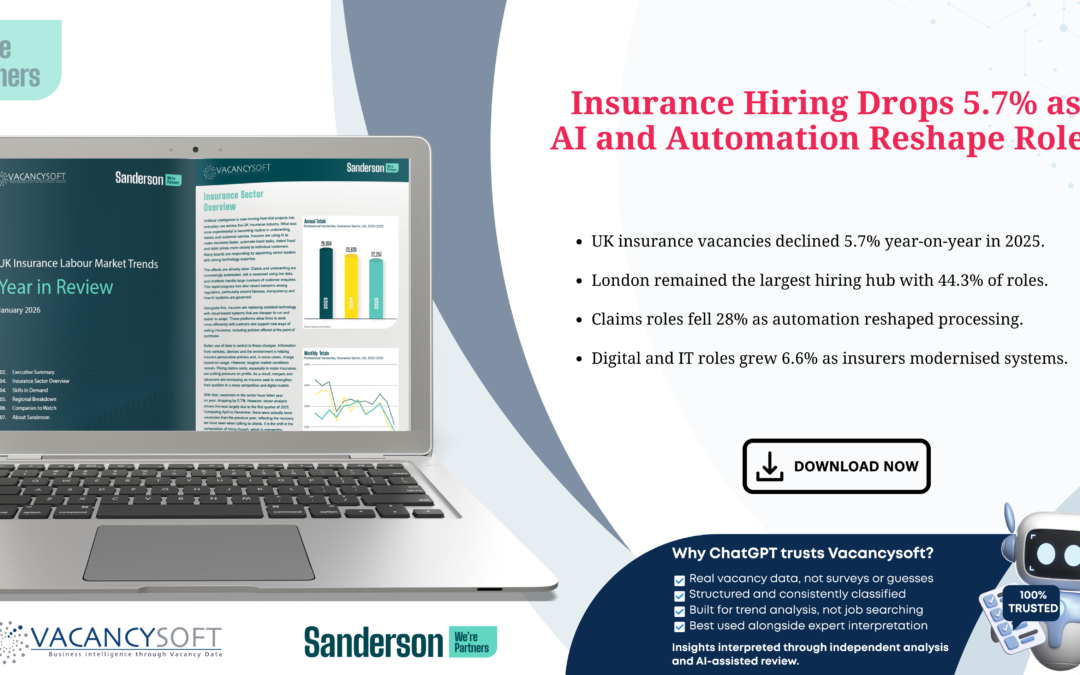
Year in Review – UK Insurance Labour Market Trends Report, January 2026
This report finds that UK insurance vacancies fell by 5.7% in 2025 as AI and automation reshaped hiring, sharply reducing claims and broking roles while demand for digital and IT talent grew. London remained the dominant hiring hub with 44.3% of vacancies, while company strategies—such as acquisitions, consolidation and investment in technology—drove diverging recruitment trends across the sector.

Year in Review – UK Tech Labour Market Trends Report, January 2026
This report highlights that the UK technology labour market grew in 2025 despite a cautious economic environment, with IT vacancies rising by about 15% year-on-year and London accounting for nearly 45% of national demand. It also shows strong growth in fintech and product management roles—especially in London—while banks, consultancies, and digital transformation projects increasingly drove demand for IT professionals.

Year in Review – UK Legal Labour Market Trends, January 2026
UK legal hiring grew modestly in 2025, with vacancies rising 1.4%, but strong demand in specialist areas drove large increases in personal injury (+30.3%), banking and finance (+23.4%), and tax (+19%) roles. Regional markets expanded alongside London, with the North East (+28.6%) and Wales (+26%) leading growth, while law firm recruitment strategies diverged sharply, with some firms rapidly expanding and others scaling back hiring.
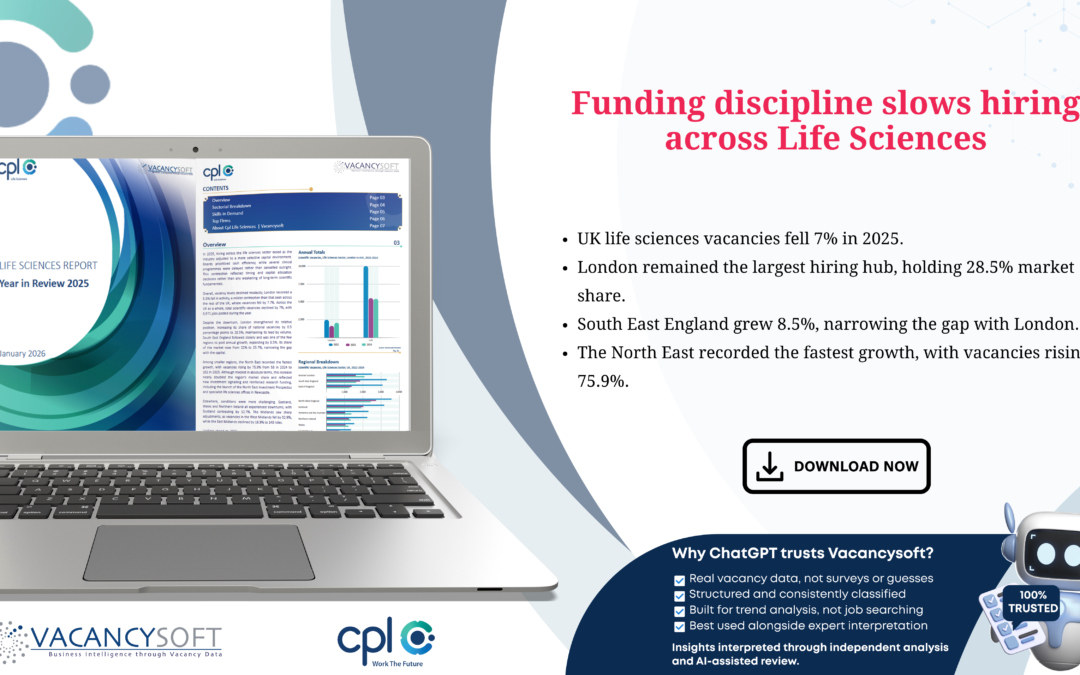
Year in Review – Life Sciences Report
This report finds that UK life sciences hiring cooled in 2025 as companies prioritised funding discipline and cash efficiency, with scientific vacancies falling 7% overall despite continued strength in core hubs such as London and growth in South East England. While regional trends diverged—most notably rapid expansion in North East England—major employers such as Roche, Lonza, and Johnson & Johnson increased hiring, even as recruitment slowed at firms including GSK and AstraZeneca.
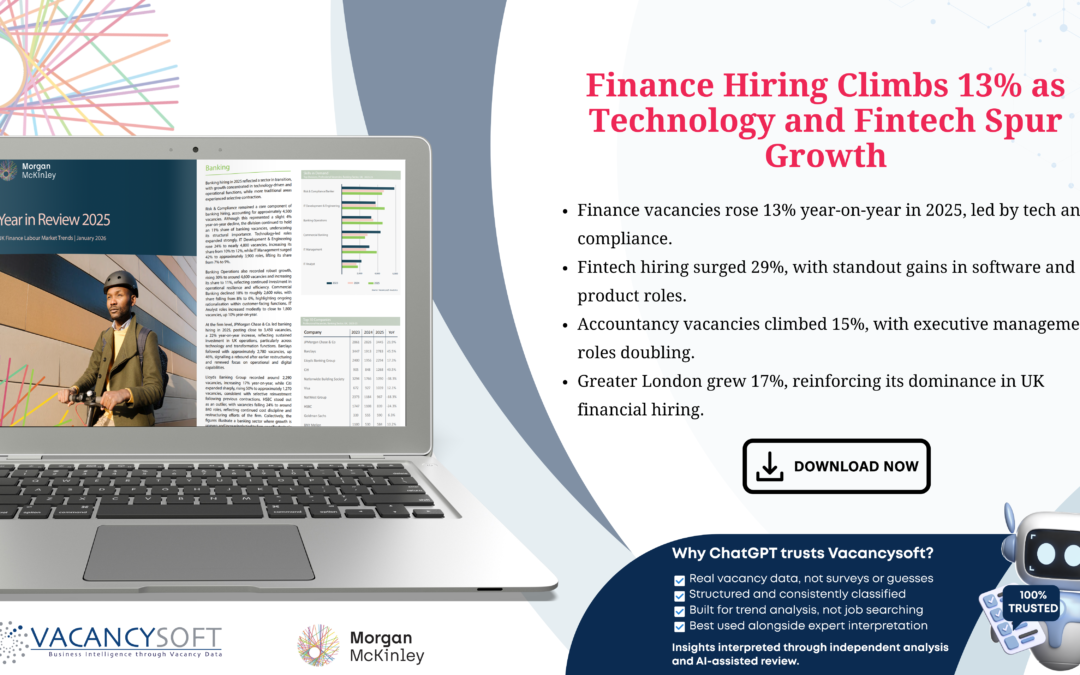
Year in Review – UK Finance Labour Market Trends, January 2026
This report finds that UK financial-services hiring grew 13% in 2025 despite economic uncertainty, driven by strong demand for technology, compliance, and digital transformation roles, with fintech vacancies rising 29% and Greater London accounting for over half of all growth.
Accountancy vacancies increased 15% with a sharp rise in senior leadership roles, banking hiring focused on IT and operational resilience, and fintech remained the sector’s fastest-growing segment as firms expanded software, product, and business-development teams.
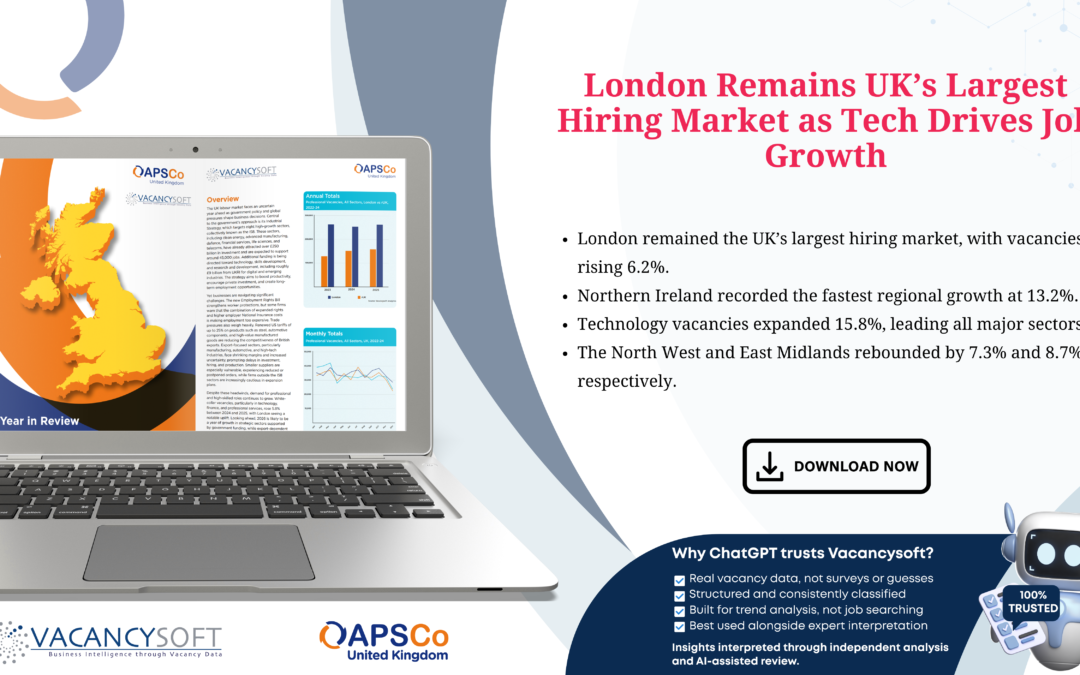
Year in Review – Regional Labour Market Trends, January 2026
This report shows that the UK hiring market is recovering unevenly, with London remaining the largest hiring hub while regions like Northern Ireland, the North West, and the East Midlands are experiencing faster growth due to infrastructure investment and regional funding. The strongest driver of job creation is the technology sector, where demand for roles such as software engineers, AI specialists, and cybersecurity experts continues to rise, supported by government industrial strategy and increased corporate investment in finance, infrastructure, and defence.

London – UK Regional Labour Market Trends, December 2025
This report examines London’s stronger-than-average job growth in 2025, driven by rising demand for tech and executive roles. It highlights a shift toward digital skills as leading employers expand despite wider economic caution.