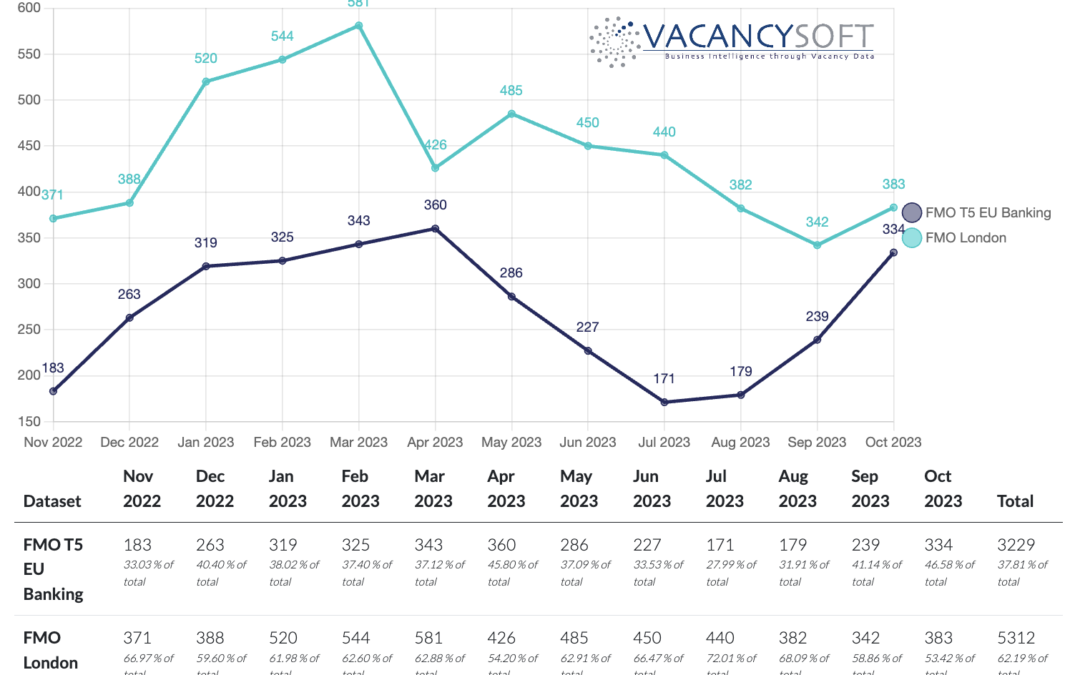
In what could become a landmark speech for Financial Services, Ursula von der Leyen has thrown down the gauntlet in a bid to create a new stock exchange to rival any in the world. Her plan, to unify the bourses of Paris, Frankfurt, Amsterdam, Madrid and Milan into one, would result in an exchange which would be the largest in Europe by some distance (including London) and be able to compete directly with New York, or anywhere else.
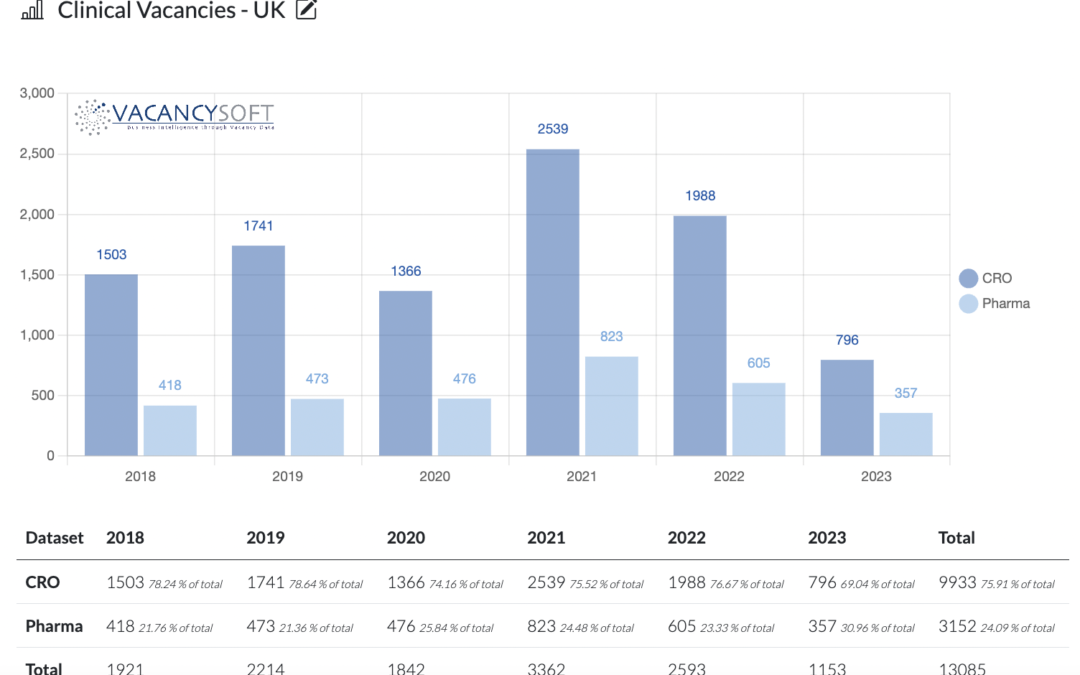
Whisper it quietly, but some of those benefits of leaving the EU are actually starting to materialize. For those in Life Sciences, new regulations taking effect have meant that the MHRA can now fast-track applications, where as a result, approvals can happen in certain instances, within 14 days.

When analyzing trends in Med Tech, we see 2023 is set to witness a substantial 27.9% increase in vacancies compared to 2019, indicating steady and robust growth. Similarly, in 2023, scientific jobs are projected to represent a 21.2% share of all vacancies, marking a notable improvement compared to the 14.2% share recorded in 2022, according to the latest Life Sciences Labour Market Trends report by CPL and market data analysts Vacancysoft.

Fixed-Term Contract Scientific vacancies remain relatively stable, maintaining a 5.3% share of all scientific vacancies. Equally, this represents the highest share observed since 2021, suggesting a continued demand for temporary scientific roles, despite a sharp fall in perm vacancies, according to the latest Life Sciences Labour Market Trends report with CPL and Vacancysoft.
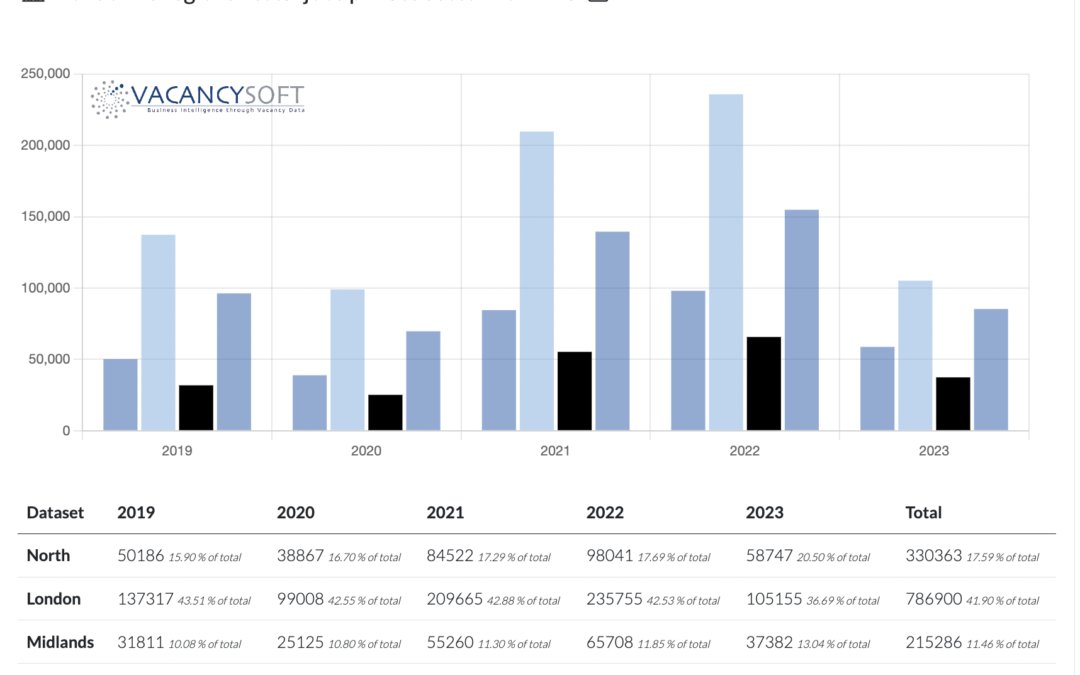
As the dust settles on the decision to cancel HS2, while the political fallout may prove high across the regions, the economic consequences are still unclear. By the same token, what is clear is the fact that over the past five years, the trend of regionalisation has taken effect and increasingly, businesses are expanding teams away from the capital. In 2023 this trend has seen a high point, in the sense that 64% of all vacancies in the private sector can now be found outside the capital, up from 56% pre-pandemic.