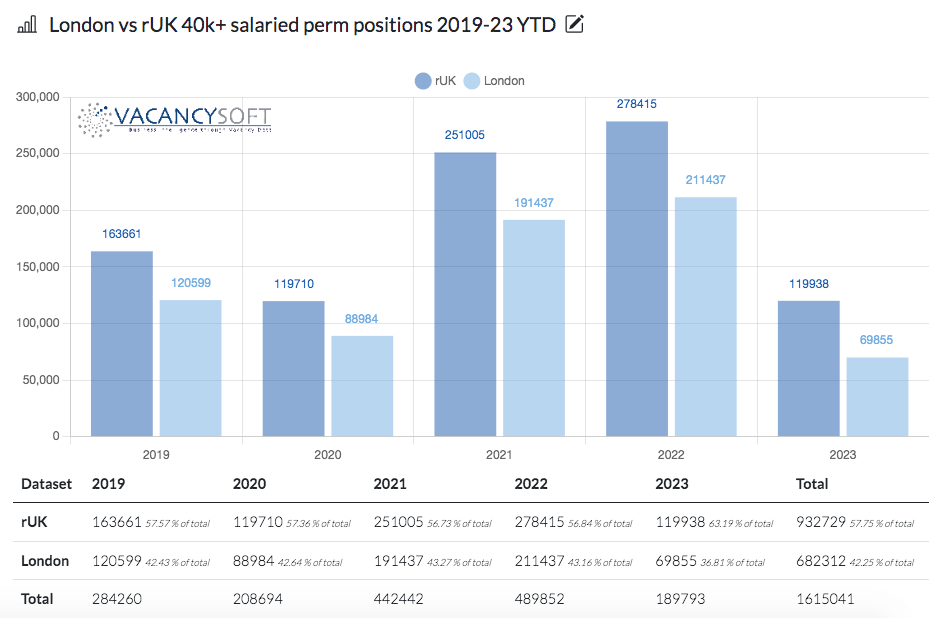
As salaries surge to match inflation, so businesses are shifting hiring away from the capital. In my previous post, recruitment is tidal, I referenced that in terms of macro job flow, what we are seeing is that 2023 is now mirroring 2019. However, there is one key distinction in that whilst activity in London is flat (vacancies in 2023 are currently on track to match 2019 exactly) outside the capital, we are seeing growth of 25.6% in terms of the monthly average, when comparing this year, to 2019, before COVID.
At first glance, 2023 looks pretty bleak. After all, there has been a dip in vacancies, year on year, of 34% in terms of the monthly average. Businesses which for the last two years were just non-stop recruiting, this year have suddenly slowed down and for recruiters, there are many who are still adapting to this reality…
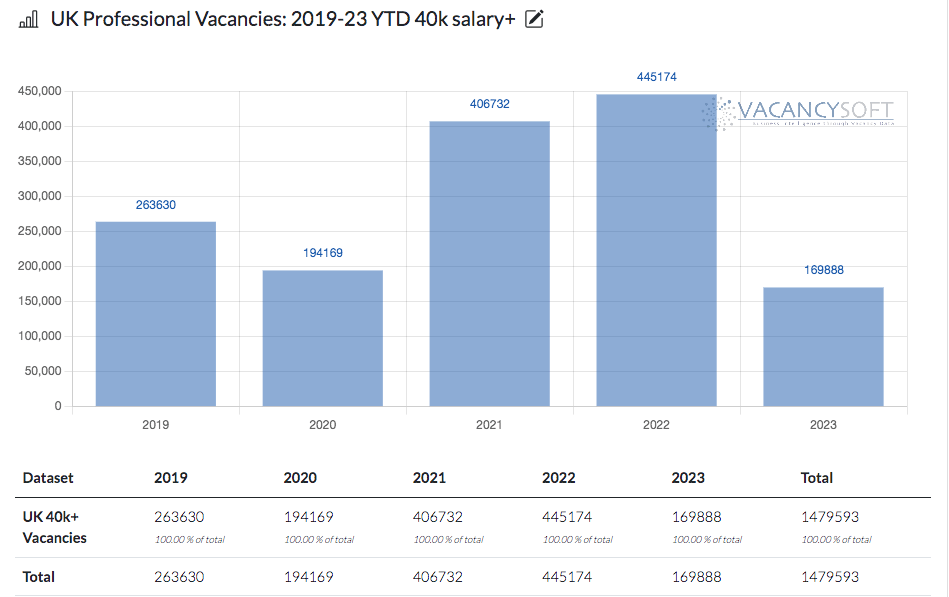
The UK market has had a three-year rollercoaster like no other in memory. From the pandemic, to the post lockdown surge, such have been the extremes, 2019, the last time we had a regular market, feels a long time ago…

For increasing numbers of businesses, hybrid work is becoming the norm, where to add to that, we are also witnessing a significant surge in work-from-home (WFH) vacancies across all functions.
In 2019, only 0.44% of permanent vacancies posted on company websites career centres were marked as remote. Compare that to 2023, where remote vacancies have comprised 4.3% of the total so far. Put simply, remote vacancies have never had such a high share of the total before.